- Zero-configuration installation with immediate visibility of security findings
- Protects against malicious open source packages, known vulnerabilities, and risky licenses
- Free for public open source repositories. Private (commercial) repositories need a SafeDep subscription
- Optionally link the installation to your SafeDep Cloud tenant for centralized policy and reporting across repositories
How to Install
- Navigate to SafeDep GitHub App
- Click Install
- Follow the instructions to install the app in your GitHub organization or repository
How to Use
The SafeDep GitHub App automatically scans pull requests for open source dependency changes. Newly introduced or updated dependencies are checked for vulnerabilities and malware.Reports
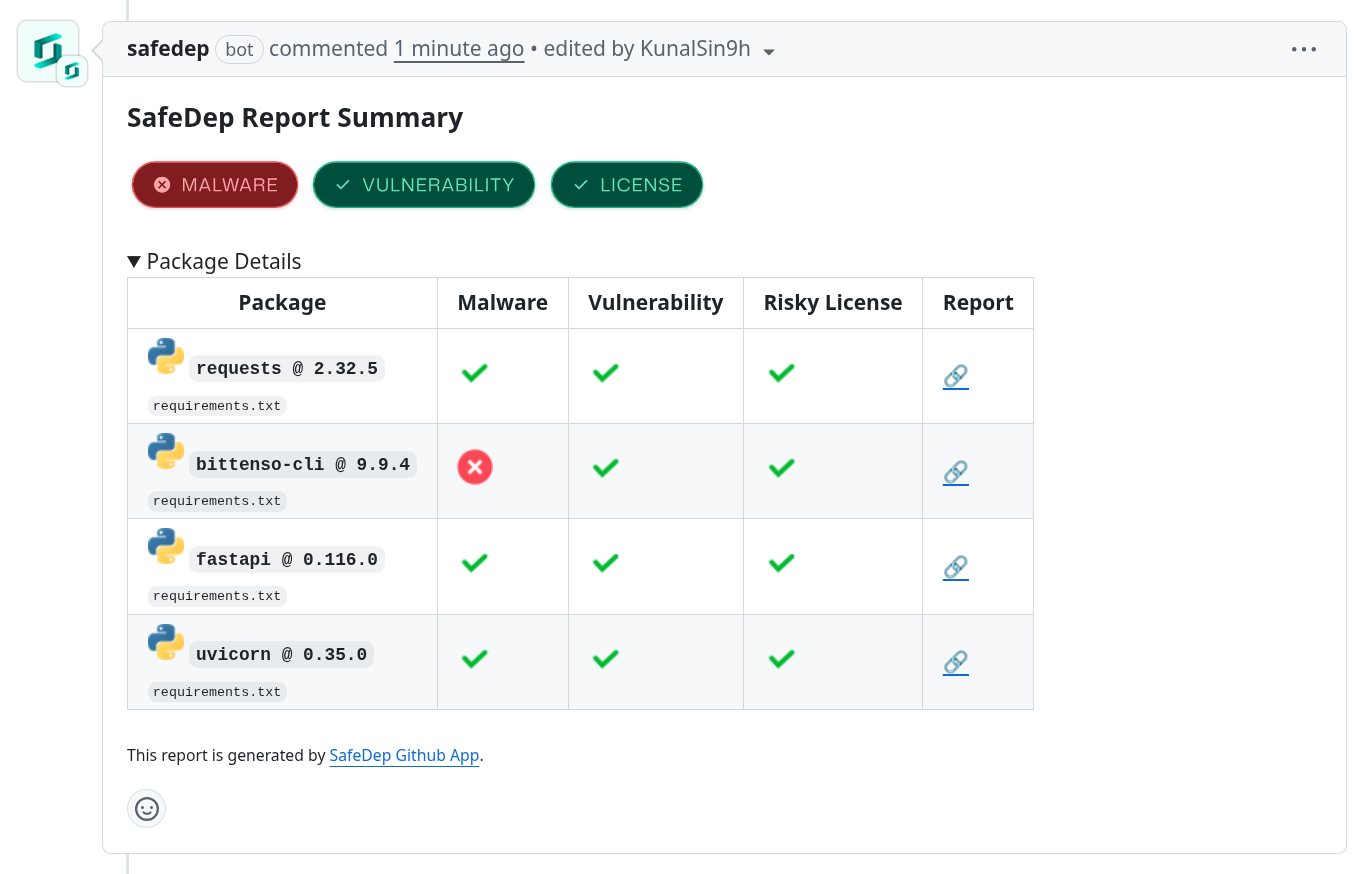
Active Protection
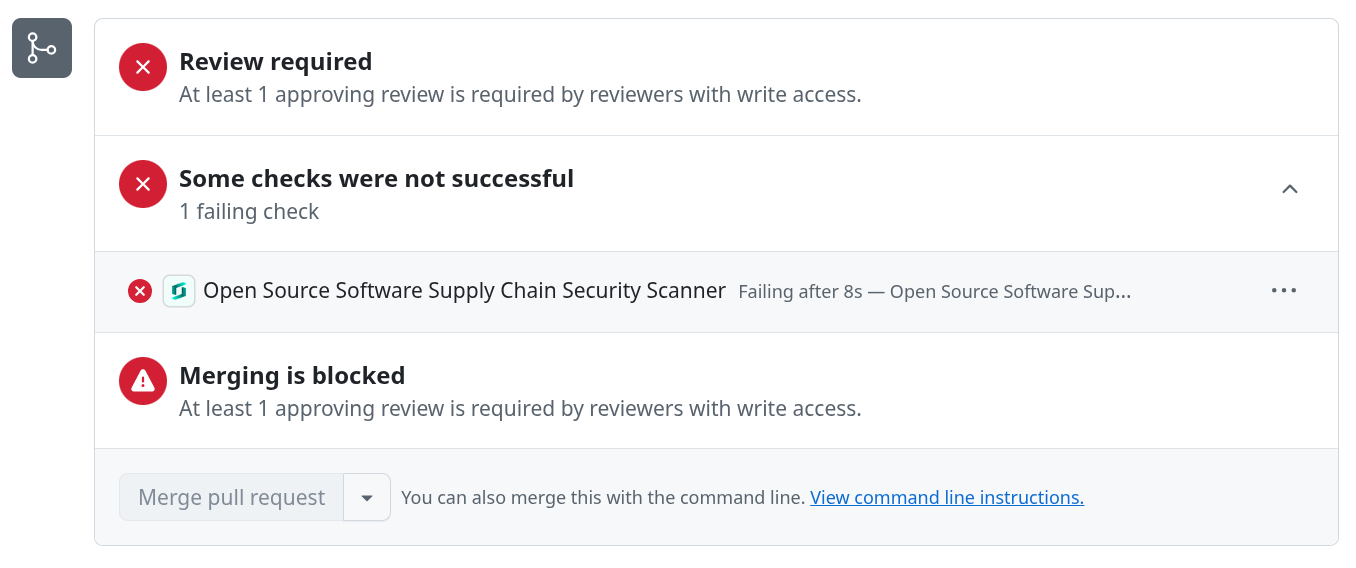
Cloud Policy
When the installation is linked to a SafeDep Cloud tenant on the Team or Enterprise plan, the check reads the cloud policy of the tenant. The policy decides the lowest vulnerability severity that fails the check, and its block and trust entries apply to the packages of the pull request. Verified malware always fails the check. With no cloud policy, the SafeDep default policy applies: the check fails onCRITICAL and HIGH vulnerabilities, as above.
A failing check shows a policy block in the comment and in the check run output. The block names the policy revision and the rule or setting that failed each finding. See Fail Pull Request Checks.
Appendix
Vulnerabilities
- Checks for
CRITICALorHIGHseverity vulnerabilities. - Uses OSV as the vulnerability database.
Risky Licenses
-
The app currently classifies the following licenses as Risky:
GPL-2.0GPL-2.0-onlyGPL-2.0-or-laterGPL-3.0GPL-3.0-onlyGPL-3.0-or-laterAGPL-3.0AGPL-3.0-onlyAGPL-3.0-or-later
Supported Lockfiles
Supported lockfiles and ecosystems:- NPM
package-lock.jsonpnpm-lock.yamlyarn.lock
- GoLang
go.mod
- PyPI
requirements.txtuv.lockpoetry.lockPipfile.lock
- RubyGems
Gemfile.lock
- Cargo (Rust)
Cargo.lock
- Packagist (PHP)
composer.lock
- Maven (Java)
pom.xmlgradle.lockfile
GitHub Code Scanning
Surface Vet findings in GitHub code scanning via SARIF.
Platform Integrations
Wire Vet into other CI/CD platforms.
Vet Quickstart
Scan a repository from the CLI.
Fail Pull Request Checks
Set the policy that the app enforces.